This antiquated idea is still being pushed by Big Pharma to sell treatments
The myths about SSRIs and serotonin

Hey, Matt Cook here, and the idea that low serotonin is a cause of depression became popular in the 1960s.
Pharmaceutical companies began looking for ways to increase serotonin back then…
…even though there were already experiments which seemed to disprove this serotonin hypothesis.
Over the years, the serotonin hypothesis has been completely destroyed.
But the serotonin boosting treatments – SSRI antidepressants, which came on the market in the 1980s — are still big sellers.
Big Pharma treatments are rarely as clean as the pharma marketing suggests…
And these antidepressants have multiple effects on sex hormones and brain regulatory hormones – aside from the effect on serotonin.

The human research was carried out at the University of California, San Francisco. This paper was published in PNAS.
The authors of this study were particularly interested in the effect of SSRI antidepressants on allopregnanolone.
Allopregnanolone is a hormone synthesized inside the brain.
It has a particular effect on GABA and GABA receptors.
This is all very important for depression – and even more so for anxiety.
Increasing allopregnanolone can help with depression, anxiety and seizures.
“The neurosteroid allopregnanolone acts as a positive allosteric modulator of GABA at GABA A receptors and hence is a powerful anxiolytic, anticonvulsant, and anesthetic agent.”
The researchers looked at the effect of these treatments on two enzymes which produce allopregnanolone in different parts of the brain.
“Allopregnanolone is synthesized by 5-AR. Allopregnanolone is also synthesized by 3alpha-HSD.”
The work was based on previous research that showed these antidepressants could change levels of allopregnanolone in the brain and nervous system.
“Previous reports suggested that some SSRIs could alter concentrations of allopregnanolone in human cerebrospinal fluid and in rat brain sections.”
Some of the bestselling antidepressants massively decrease one of the enzymes which create allopregnanolone.
“The SSRIs fluoxetine, sertraline, and paroxetine decrease the conversion of 5alpha-dihydroprogesterone to allopregnanolone by human 3alpha-HSD 10- to 30-fold.”
The treatments also had profound effects on the conversion of other hormones…
…some of which are extremely important but mostly overlooked masculine brain hormones.
“SSRIs also affected conversions of androgens to 3alpha- and 3alpha, 17beta-reduced or -oxidized androgens mediated by 3alpha-HSD.”
These medications affect far more than brain serotonin!
The effects of these antidepressants on these critical enzymes seem to be specific to certain parts of the brain.
Other research indicated that these same treatments could increase allopregnanolone in the brain.
It just goes to show that even more than 30 years after these treatments hit the market… we still don’t understand even the most basic effects on hormones.
“The region-specific expression of 3alpha-HSD mRNAs suggest that SSRIs will affect neurosteroid production in a region-specific manner.”
Over the years, many problems have been pointed out regarding the serotonin hypothesis.
One of these problems is the fact that menstrual cycles have a huge effect on depression and anxiety.
Menstrual cycles are particularly dominated by estrogen and progesterone – not serotonin.
Estrogen is a major trigger for depression and anxiety.
And progesterone is a precursor for allopregnanolone – one of the brain hormones strongly affected by these antidepressants.
This has led some to speculate that in the minority of cases that these treatments are effective, they may be working by affecting hormones other than serotonin.
It’s a very important observation because of the extremely long list of potentially life-threatening side effects of SSRIs.
There are much, much safer ways of boosting progesterone and allopregnanolone.
“Our results may thus help explain the rapid alleviation of the anxiety and dysphoria associated with late luteal phase dysphoria disorder and major unipolar depression by these SSRIs.”
You should always consult your healthcare practitioner for guidance on medical diagnosis and treatment.
—-Important Message—-
Ever heard of oxytocin? It’s the hormone for erections in the bedroom
I’ve discovered a hormone more powerful than serotonin or even testosterone…
It’s called oxytocin and it’s responsible for that addicting, pleasurable feeling you get when you’re intimate with a woman.
And studies show oxytocin is the true hormone that increases erections in men:
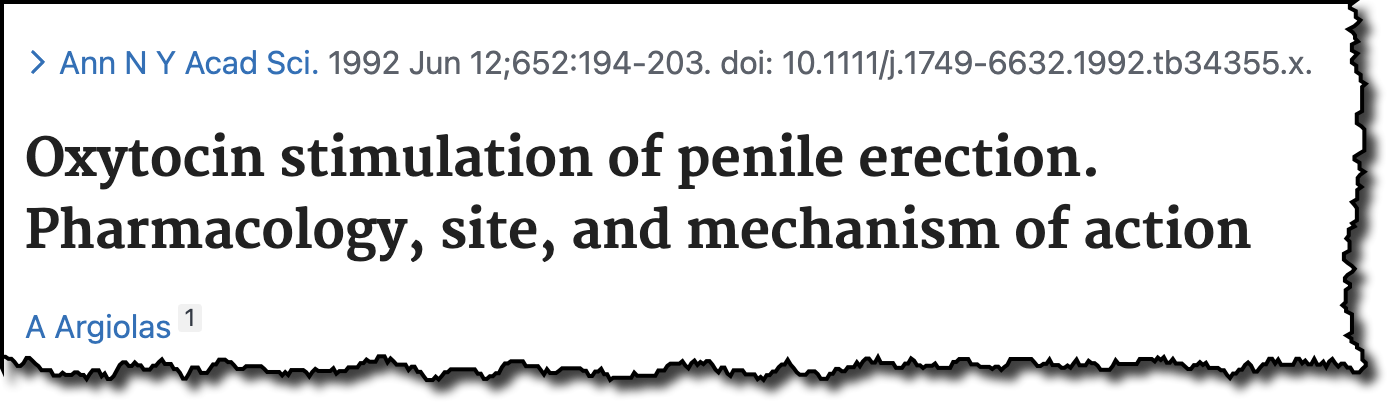
So how do you boost oxytocin levels for better erections and even more pleasure?
Well here’s the thing — it has to be made naturally in the body…
So what I’ve done is come up with a simple protocol that gets your body to produce more oxytocin on its own.
Here’s how to try this oxytocin protocol tonight (with a partner or by yourself)
———-