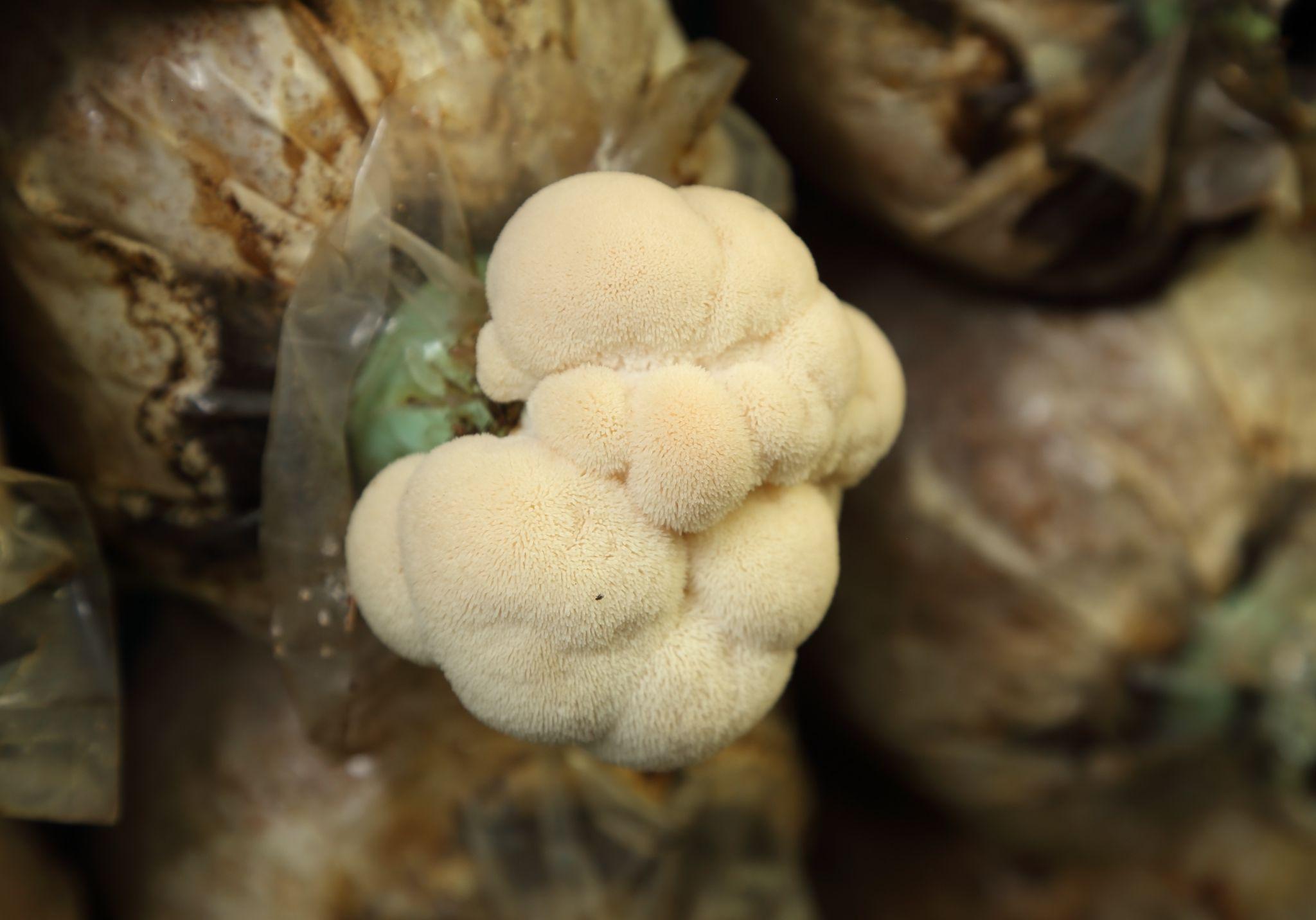
It’s called Yamabushitake
This medicinal food can improve mental function
Mushrooms have been used in medicine for thousands of years.
Many health claims are made for various mushrooms but toxicity is a real concern.
There is no doubt that mushrooms can be useful…
…but I wait for good science and human studies before considering medicinal mushrooms.
A new study shows that one type of medicinal mushroom can improve cognitive function in just weeks!
The examination was based on a standardized test for dementia.

This study was carried out at the Mushroom Laboratory of Hokuto Corporation in Nagano, Japan. The results were published in the journal of Phytotherapy Research.
The study investigated the effects of Yamabushitake.
Often called Lion’s Mane, this mushroom has long been a staple of Traditional Chinese Medicine.
30 men and women were recruited for this 16 week trial.
All the participants are diagnosed with mild cognitive impairment — the loss of intellectual function that can happen with ageing.
Mild cognitive impairment is sometimes an early sign of dementia.
“We recruited 50- to 80-year-old Japanese men and women diagnosed with mild cognitive impairment in order to examine the efficacy of Yamabushitake for improving cognitive impairment.”
The study assessed cognitive impairment based on the Revised Hasegawa Dementia Scale (HDS-R).
This is a standardized test of cognitive function — it is used to assess people for dementia.
The Revised Hasegawa Dementia Scale consists of nine simple questions.
The participants were enrolled for two weeks prior to mushroom supplementation for assessment.
After the initial assessments the study began.
Half of the people were supplemented with Yamabushitake and the rest of the people were given an inactive placebo.
“30 subjects were randomized into two 15-person groups, one of which was given Yamabushitake and the other given a placebo.”
The participants in the mushroom group took 1g of mushroom extracts three times a day for 16 weeks.
The study revealed that Yamabushitake can improve cognitive function in elderly people diagnosed with mild cognitive impairment.
“Yamabushitake group showed significantly increased scores on the cognitive function scale compared with the placebo group.”
The average scores in the placebo group remained around 24.
The scores in the mushroom group increased from 24 to 27.
Higher scores are better — the maximum score is 30.
Those taking the supplementary mushroom showed higher scores on average at each time point.
The participants were tested four times (each 4 weeks apart) while taking the supplemental mushroom.
“The Yamabushitake group’s scores increased with the duration of intake.”
At week 16 the people who had been supplementing with mushrooms stopped treatment.
The scientists tested them again four weeks later.
When people stopped taking the mushroom their scores dropped.
“4 weeks after the termination of the 16 weeks intake, the scores decreased significantly.”
Their scores had not dropped back to baseline four weeks post supplementation — but they were heading that way quickly.
The experiment included detailed blood tests of all the participants right throughout the study.
This is critical as mushrooms can be toxic, particularly to the liver.
Among the blood tests conducted were blood pressure, liver enzymes, white blood cell count, and cholesterol.
There was a lot of variation in the blood test results but nothing was out of normal range.
“Laboratory tests showed no adverse effects of Yamabushitake.”
The authors believe that this mushroom can improve mild cognitive impairment.
It may prove to be a useful treatment for dementia like Alzheimer’s and Parkinson’s.
“The results obtained in this study suggest that Yamabushitake is effective in improving mild cognitive impairment.”
There are a number of side effects reported.
Almost half of the people in the mushroom group had mild discomfort or diarrhoea.
Almost as many the placebo group reported the same symptoms. The side-effects were mild.
Hopefully this study will stimulate more scientific research into the effects of medicinal mushrooms.
Mushrooms can be dangerous and the quality of medicinal mushrooms is notoriously poor.
I think it’s best to use medicinal mushrooms only under the supervision of someone who knows a lot about them.
You should see a healthcare practitioner about diagnosing and treating mild cognitive impairment or dementia.
—-Important Message—-
Is this 1 food good or bad for men?

Remember Dr. Robert Atkins, diet guru and author of the all time best selling diet book?
Dr. Atkins advocated very heavily against 1 particular food…
…1 food that I believe helps men live to 110 and 120…
But Dr. Atkins did not eat this 1 food and told everyone it was very bad for you…
But here’s the thing —
Robert Atkins died in his seventies. He didn’t live very long at all.
Now people will say: “He slipped on ice, Matt.”
And yes, he slipped on ice, but Dr. Atkins actually had a heart attack.
He had hardening of the arteries…he was obese… He was in very bad health…
And other gurus who avoided this 1 food met similar fates, dying far younger than they should have…
Like Nathan Pritikin and Euell Gibbons, both dying in their 60s.
So YOU decide — is this 1 food bad for men… or is this 1 food actually the key to living healthy and happy until 100 and beyond?
———-